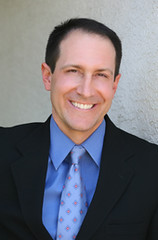
Wikinews interviews team behind the 2,000th featured Wikipedia article
| This article mentions the Wikimedia Foundation, one of its projects, or people related to it. Wikinews is a project of the Wikimedia Foundation. |
Sunday, April 13, 2008
This week saw the English-language version of Wikipedia, the collaboratively written online encyclopedia, reach 2,000 featured articles with the inclusion of the article El Señor Presidente. Featured articles (FAs) meet Wikipedia’s highest standards for quality, accuracy, neutrality, completeness, and style, and thus are considered the best articles on Wikipedia.
The Wikipedia team that carries out the assessment and quality control before conferring the status of featured articles promoted five articles to FA status at the same time: Walter de Coventre, Maximian, El Señor Presidente, Lord of the Universe, and Red-billed Chough. With five promoted at the same time, conferring the status of 2,000th on one is an arbitrary decision and in some respects any of these articles could actually make a claim to the honour.
The article El Señor Presidente was created and developed by a University of British Columbia class, “Murder, Madness, and Mayhem: Latin American Literature in Translation“. While an important milestone, the 2,000th featured article is also symbolic of Wikipedia’s growing role in the 21st century learning arena.
The professor of the class, Jon Beasley-Murray, began using Wikipedia as a collaborative space where his students could both do coursework and provide a type of virtual public service. Thus, he created a Wikipedia project, Murder Madness and Mayhem, that focussed on creating articles relating to the Latin American literature covered in his class. Not surprisingly, El Señor Presidente is considered one of the most important books in Latin American literature, written by Nobel Prize-winning Guatemalan writer, Miguel Ángel Asturias.
The Wikinews team contacted Prof. Beasley-Murray, who agreed to be interviewed for this story. His responses can be found below. Included are sections soliciting responses from three students who took the class and helped create and bring El Señor Presidente to Feature Article status. Thus far the project has created seven good articles in addition to the 2,000th featured article.
Professor Beasley-Murray, thank you for giving us some of your valuable time and agreeing to talk to us. Can you give some background on what prompted you to start this project?
- Prof. Jon Beasley-Murray: I should say first that I’ve written some reflections at the project on Wikipedia itself, as an essay I entitled “Madness”.
- In short, however, I’d done some editing on Wikipedia a year ago. I’d got into that rather by accident–after finding to some surprise that some of my academic work had been written up at the site. I then spent some time trying to organize and expand articles and categories relating to Latin America, particularly Latin American culture, which is my area of expertise. I discovered that Wikipedia’s coverage of this area was uneven at best. It was while I was involved in this that it came to me that students could usefully participate on the site. They use Wikipedia anyway; why not find ways in which they could also participate? And I’d come to realize that it’s only by participating and contributing that you can really understand the Encyclopedia, both its strengths and its weaknesses but above all the way it comes to be how it is.
- And I’ve always been interested in using technology in teaching: mailing lists, websites, blogs, and so on. But I’ve never much liked “educational technology”: programs such as WebCT that students only ever use as part of a course they are taking. By creating something of an educational ghetto, educational technology seems to me to miss out on the most interesting and exciting possibilities of the Internet: precisely the fact that it opens up to the world outside the classroom, and can reconfigure or perhaps even break down the rather limited relationship between teacher (supposed to be the expert and source of all authority) and the student (too often treated as the passive recipient of knowledge).
- Overall, a Wikipedia assignment offered lots of possibilities, including:
-
- teaching students about Wikipedia, an important site that they use (and too often misuse) often
- improving Wikipedia itself, by generating new content on topics where its coverage is lacking
- encouraging students to produce something that had relevance outside the classroom, in the public sphere
- giving them tangible goals that were measured by something other than my own professorial judgement
- changing their views about writing, by stressing the importance of ongoing revision
- teaching them about research and about how to use and evaluate sources
| … we did get one “speedy deletion” tag. It was placed, within less than a minute, on an article that I created in front of all the students, during class time. For one horrible moment, in front of the whole class, I had a feeling that things might go terribly wrong. | ||
((WN)) Did you consult with fellow academics or students prior to launching this project?
- JBM: No, not really. Perhaps I should have! But off and on last summer I did discuss the idea with a friend who works in educational technology at UBC, who had helped me with the implementation of blogs in my courses. And this friend, Brian Lamb, was as always very encouraging and supportive of this kind of experimentation. He looked into the possibility of helping me apply for a grant for the project, but it seems there aren’t any for this kind of thing. I decided to go ahead anyway, essentially on my own.
- And in January, as the project was getting underway, I signed up with Wikipedia:School and university projects. There were plenty of other previous and ongoing educational projects listed there, so I presumed I wasn’t so alone and that what I was doing wasn’t so innovative. It was only much later that I realized just how different and how ambitious this project was: we were aiming to create featured articles, ideally twelve of them, and no other educational project had ever set out to do that!
((WN)) I would assume the Wikipedia community was in favour of your project, did anyone outwith that community make notably critical comments about your idea?
- JBM: No, but then as I say I hardly talked to anyone about it!
- I should mention, however, that it’s not necessarily a given that the Wikipedia community was in favour. I’ve noticed that with some other educational projects, the initial reaction from Wikipedians has not always been so favourable. In part that’s because students are encouraged to write a new article on anything they can come up with, and these are swiftly marked for deletion. In part that’s because they write essays offline, then upload them, and naturally enough they are not in Wikipedia format or do not follow Wikipedia conventions (about “original research,” for instance). Those articles are soon laden with tags, and their talk pages filled with warnings or reproaches. We managed to avoid that on the whole… mostly by accident! But we also avoided those problems, I think, because I’d spent a fair amount of time on Wikipedia already and was aware of some (but far from all) the habits of the site. And more importantly because we had quite definite aims: students weren’t editing Wikipedia for the sake of it.
- Even so, we did get one “speedy deletion” tag. It was placed, within less than a minute, on an article that I created in front of all the students, during class time. For one horrible moment, in front of the whole class, I had a feeling that things might go terribly wrong. The article tagged for speedy deletion was El Señor Presidente… which is now, as you know, Wikipedia’s Feature Article number 2,000.
((WN)) How significant a percentage of the mark you were giving for the class came from Wikipedia contributions?
- JBM: Originally, the Wikipedia assignment was to have represented 30% of the total grade for the course. Just over half-way through the semester, progress had still been relatively slow, and I was getting worried. So I proposed to the class that we change the course assessment, and that we scrap the planned final essay or term paper. This would mean that the other elements (a mid-term, blogs and participation, and Wikipedia) would all come to be worth more. We talked about the proposal, and I gave them some time to think about it. We then had a secret ballot, and I said in advance that we would only go ahead with the change if two thirds (66%) were in favour. In the end, 85% of the class voted for increasing the significance of the Wikipedia project to 40% of the overall course grade.
((WN)) As a member of the Wikimedia Foundation’s communications committee I (Brian McNeil) frequently see both sides of the conflict over how relevant or reliable Wikipedia is. This ranges from queries coming in from students working on their school paper who want a response to their librarian and teachers effectively banning use of Wikipedia, to the other extreme such as a recent case where a teaching surgeon in the UK asking for permission to quote extensively from Wikipedia for a paper on the site’s relevance and potential use for undergraduates in medicine. I have a stock answer detailing how to check Wikipedia sources; that Wikipedia is a great starting point for research, and that if you disallow Wikipedia you should disallow Britannica. Is this something you would agree with?
- JBM: Over the course of this semester, I’ve come up with a response of my own to this question. If a Wikipedia article is a good one, then you won’t need to quote it, as it will have links to all the relevant sources. And if it doesn’t have those links, then it isn’t a good article, and shouldn’t be quoted in any case.
- Before this semester, I explicitly banned students from quoting Wikipedia articles in their essays. And I will continue to do so. I also look askance at them citing dictionary definitions. And though they don’t quote Britannica (I think Wikipedia has now for all intents and purposes replaced Britannica), I would likewise be unimpressed if they were to do so.
- On the other hand, of course, as you say, Wikipedia can be an excellent starting point for research. I personally use it often precisely for that reason.
((WN)) Was the experience of using a wiki for collaboration something you would repeat? There have been suggestions for something you might call “EduWiki” for the collaborative development of course material. Would you get involved with something like that? Do you see potential for use of the MediaWiki software in other areas of education? Such a project could be hosted under Wikimedia Foundation projects such as Wikibooks or Wikiversity. Would you favour that over a closed project within academia where contributors’ credentials could be verified?
- JBM: I’m not sure. As is perhaps already obvious, I’m horribly suspicious of almost anything that has “edu” in the title. And I say that with all due respect to my friends who are in “EduTech”–though I should add that they are often equally suspicious, if not more so! I’ve had a couple of other experiences with wikis, in relatively closed environments, and they weren’t particularly successful. I think that was because there was never a critical mass. The one thing that Wikipedia really has going for it is critical mass. (Even then, of course, only a tiny fraction of the people who read Wikipedia ever edit it.)
- The other thing is that too many academics still don’t get the wiki ethos. It’s hard for them (us) not to be possessive about our work. This I think is what causes most of the antagonism and frustration when academics do get involved in Wikipedia. The issue is seldom “expertise,” and much more often ownership. I realize I’m talking in broad strokes here, but for instance a wiki was set up in my faculty, and it proved impossible to edit anyone else’s texts. We might as well have been putting up .pdfs. It was an exercise in presenting position papers, rather than in collaborative writing.
- Meanwhile, as for the topic of credentials, which I know has been much debated on Wikipedia, I think that’s a real canard. I don’t think credentials matter much. My students don’t have much in the way of credentials, but they’ve done superior work.
((WN)) Would you describe your students as receptive to the idea of doing coursework where the general public could view their works in progress?
- JBM: I’d often asked students to write blogs in previous courses, which are also of course visible to the general public. But not too many people bump into such student blogs, except on rare occasions. Here, the point wasn’t so much that the Wikipedia articles were public, but that they were editing one of the Internet’s top ten sites. So one day I’d poked around and found out how many people had visited particular pages that we’re editing. (I compiled and later updated these numbers here.) And the next class we played two little guessing games. One involved what percentage of Wikipedia’s articles they thought were classified as “Good Articles”; they started at 30%, and it took them a while to get down to 0.15%. This was just after El Señor Presidente had made Good Article status, so it gave them a sense of the achievement, I think.
- The other little guessing game concerned how many page views they thought their articles attracted per month. I can’t remember exactly the figure they started off with in this case, but I can tell you it was a lot lower than the 50,000 plus that Gabriel García Márquez actually receives. When we figured out that that article must have something over 600,000 visits a year (I now reckon it’s almost three-quarters of a million), the team who were editing that page were somewhat shocked. But my sense is that the realization was also rather exciting. And I know that the students who will shortly find their article on the mainpage of the English Wikipedia (it’ll be there on May 5th) are absolutely thrilled. Though frankly I think they (and the other students) are less interested in the fact that the “general public” can see what they’ve done, than in telling their friends and family to take a look at their work.
((WN)) Did any students fail to fit in and find themselves unable to work with Wikipedia?
- JBM: Yes. There was a wide range of responses. Some were very enthusiastic. Others took a while to get into it. And there were a few who never really found themselves at home editing Wikipedia. I’m not sure of the reasons in each case. For some the technology stayed too intimidating, or rather (I suspect) they just didn’t put in enough time to get past that first hurdle. As this was group work, however, some of the effects could be worrisome at times. So it’s something I’d have to think over before trying a similar experiment again.
((WN)) Do you feel that doing this part of the course in such a radically open way encouraged any of the students to work to a higher standard than the might otherwise have?
- JBM: Absolutely. No question of it. The most active students, at least, have helped produce articles of c. 4,000-8,000 words that are comprehensively researched, repeatedly revised, and with a meticulous attention to detail. The standard of every single article is far better than any term paper that they would have written otherwise. Of course, some students have been more actively engaged, and so have both learned more and been pushed more than others. But the constant reminders and questions from other Wikipedia editors, particularly the members of the FA-Team who have done much of the copy-editing, has forced them consistently to reflect upon what they are saying, how they are saying it, and what their sources are.
((WN)) In reflecting on the project, is there anything you would have done differently?
- JBM: There were aspects of the groupwork that didn’t work out as they could have. And we did get off to a rather slow start: I’d have to think about how to remedy that. Moreover, once the project is over, the FA-Team and I (plus, of course, any students who are interested) plan to have a post-mortem on all aspects of the collaboration. So there are certainly things that could be improved. I know I’ve also learned a lot on this project, and next time would hope to benefit from what I’ve learned.
((WN)) You’ve hit about 6,000 edits personally, have you caught the “wiki bug”? Will you keep editing?
- JBM: 7,000 now! I’ll need to stop editing for a while once the project is over: it has been very time-consuming. But I plan to be back in the Fall.
((WN)) In light of the apparent success of your project what would you say to other academics to try and persuade them to try similar experiments?
- JBM: Absolutely. I don’t want to come across as too much of a Wikipedia booster. I can understand exactly why many academics’ engagement on the encyclopedia has proven to be disappointing or frustrating or worse. But I think that, especially if academics take some time to understand aspects of Wikipedia’s culture, there are forms of engagement that can be very rewarding. We were rather fortunate to run into the FA-Team, a group of experienced Wikipedia editors that had recently been established in order to help others promote articles to Featured Article status. Their involvement has been an absolute Godsend. But I see no reason why something similar (or even unpredictably different, and perhaps better) might not emerge in other circumstances.
((WN)) Before moving on to bringing your students into the discussion, I’d like to close with your thoughts on making this a regular part of the curriculum. Do you intend to do so? Do you feel other institutions should examine your project with a view to emulating it?
- JBM: I certainly intend to repeat the experiment. The one downside for an instructor is that, if it is to be done right, it is very labour-intensive. On the other hand, in terms of capital resources it is essentially free. My university (and many others) pays millions of dollars per year for site licences for educational software such as WebCT. That’s a massive waste of money, as far as I’m concerned; though it’s a lucrative racket for the people selling the software. It’s also, I’d say, an abdication of an important aspect of the university’s mission: to invest in the Commons. The trend in contemporary academia is too often towards privatization and enclosure. (Though I should note that there are valiant exceptions, and my former colleague John Willinsky‘s work on open access is exemplary.) The more universities engage with Wikipedia, and the more they realize that they can do so without necessarily dropping the high standards of research and academic rigour that it is also their duty to safeguard, the more they benefit not only their own students, but also the public good.
In addition to the one featured article, seven made “Good Article” status. How much of an encouragement was that to those of you involved in the project?
- Monica Freudenreich: I honestly cannot speak for the rest of the class but I think that everyone involved was a little bit weary (Ed: wary?) of this project. None of us had ever embarked on this sort of thing in our undergraduate careers before and to say the least, were unsure of how this would all turn out. Being students, we are prone to leave things to the last minute and with this project that was definitely not a possibility. So, despite a slow start in general, I think the status most of the articles in our project achieved is really impressive and that is a huge encouragement in itself
- Katy Konyk: I can’t speak for the rest of the class but I think seeing so many articles achieve good status proved that he goal was very achievable. I think the only downside was that in class people are going to work at their own speeds so having others reach good article status, if you are not there yet, sometimes added to the pressure.
- Elyse Economides: I think it was a form of encouragement, but also made the task seem a bit daunting. It was exciting to see that so many of the groups could attain the goal of “Good Article” status at the end of four months, but it also spoke to the amount of time and effort needed to reach that point. Hopefully seeing their classmates achieve “Good Article” status encouraged the individual groups that the same achievement was also possible.
((WN)) How long were you involved with Wikipedia before you really felt Good or Featured was achievable?
- MF: I created a user account in January, along with almost all of the class as it was the first time I realized that one could edit wikipedia. The page I believe was created, with the help of Dr. Beasley-Murray on January 15th. After we got a “speedy deletion” tag put on our page, I thought I should get some content up there to make sure that it wasn’t deleted, as I have no idea how to create a page. So, we were involved with Wikipedia for about 3 months before we were put up for GA review and then it was just under 4 months when we were awarded the FA gold star. I do not think length of time with Wikipedia is important before achieving Good or Featured articles but rather quality of the content and willingness of other wikipedians to collaborate on the project. I relied on the more experienced Wikipedian users to let us know when Good or Featured Article status was achievable and create checklists for us to complete before getting to either stage.
- KK: When we were first presented with this assignment in the middle of January I admit we were very determined to get a featured article and I don’t think I really realized how much overall work and reworking of the article would be required to attain that goal. In mid-February we spent a couple days trying to read every English source we could get our hands on and we were dumping the contents onto the page. It was at this time that others really started to take an interest by making suggestions and doing heaps of editing themselves. To be honest it felt a little overwhelming, realizing how strict Wikipedia rules are and all the editing we needed to do. While the extensive requirements were overwhelming at first they also made good and feature article status feel achievable because we were able to see exactly what we needed to do.
- EE: Once Professor Beasley-Murray seriously encouraged us to start working on our articles, by assigning us to make one edit, large or small, to our article, creating an article on Wikipedia seemed slightly less intimidating, although it was still a huge endeavor. Most of the framework and information that carried through the editing process was formed during late February, and that’s when the status of “Good Article” became more of a tangible goal. The input from outside contributors and Wikipedia experts also became quiet salient at this point, and it continued on through the entire process.
((WN)) If you could improve the guidelines for people wanting to take articles up to Featured status, what would you change?
- KK: I think the guidelines are fair and are what make Featured Articles such reliable sources. My only comment would be that the Manual of Style was extremely inaccessible to lay users, like myself and if there hadn’t been professional editors who knew what they were doing I don’t know if we could have gotten over that obstacle.
- EE: Although I probably didn’t work as closely with the guidelines as the other members of my group, from what I experienced, there are a fair amount of technical and professional level requirements that is appropriate for the commitment to continuity and reliability, but difficult for beginning users to understand and properly use. The guidelines are a necessary component of Wikipedia, and Wikipedia provides comprehensive resources to explain these tools. Perhaps the best way to feel confident in using the guidelines is to practice making use of them and look at other articles for examples.
((WN)) Do you feel that having anything you did immediately viewable by anyone on the Internet encouraged you to aim for a higher standard than you might have with a more conventional paper that only the professor would see?
- MF: Not really. I think what pushed us to achieve higher standards were the other wikipedian editors. They were constantly pushing us to find better references and to reference everything. In working towards GA and FA they set the bar incredibly high. Blogs and other internet sites such as Facebook are also readily viewable to anyone and they often have a very low standard, if any standard at all. So, I do not think that it was because the article and our work was being shown on the internet that we worked so hard at this project. The support of the other wikipedians along the way was critical for me to both keep working at it and to set the standard very high indeed.
- KK: I don’t think that it was because our work would be immediately visible that we aimed for a higher standard. Personally, I think what allowed us to aim for a higher standard was the ability to receive feedback and continually rework the page, which is very unlike a paper where you only have the opportunity to submit it once and cannot fix the paper according to the comments. In this sense, Wikipedia was a much better learning tool than a paper, we were actually able to engage with the comments from other editors.
- EE: I would almost say it has the opposite effect. While many users on Wikipedia are careful about the material they post, Wikipedia is a fairly anonymous resource, which means an individual’s contributions may not be directly linked back to that person. Wikipedia is also constantly changing as editors come and go, so the information one contributes is never truly permanent. A paper is always directly linked to the individual and unlike Wikipedia, the information placed within it is permanent.
((WN)) Do you believe that contributing something to a ‘digital commons’ gives you more of a sense of achievement than just turning in a term paper?
- MF: Undoubtedly yes. This page will be read by countless people over the course of its existence. Because I have worked so hard writing and re-writing it, I am extremely proud of the finished result, I almost can’t believe I helped write it when I look back over it. Term papers I have handed back end up in a binder than eventually sits under my bed and files sit on my computer unopened ever again. This Wikipedia page will be seen and likely used by others in the future. After all, I am quite confident that the references list is a comprehensive list of nearly everything published in English on the subject. Any student or person looking to read more about El Senor Presidente no longer has to look any further than our references list. Now that is something truly amazing!
- EE: Yes and no. While contributing to the creation of a “Featured Article” means disseminating that information to a virtually unlimited number of people, the creation of a term paper is also a feat in and of itself that requires a great deal of research and editing. It is true that within the forum of Wikipedia, an exponentially larger amount of people will see and recognize an individual’s work, but it is equally impersonal. I find each to inspire a sense of achievement (and perhaps mixed with a sense of relief as well).
((WN)) Have you caught the “wiki bug”? Will you keep editing?
- MF: I am not completely sure. I think Wikipedia is a great resource and I have a lot of admiration for all those out there that work to make Wikipedia a thorough and reliable resource but I don’t know quite yet if I will keep editing. I would like to say yes but between two jobs and five courses right now I will have to stop or cut back until the semester ends. As for the summer, with three jobs and a couple classes, again I don’t know how much time I will be able to dedicate to Wikipedia but I think as I read novels in my spare time or do research for future term papers, I will definitely add references and information about future subjects and topics I study. I do not think I will completely stop editing all together but I will undoubtedly have to cut back.
- KK: I don’t know if I will keep editing, only because I now know the immense amount of work and research that is required to produce quality work. I have caught the ‘wiki bug’ in the sense that I have a lot more respect for other Good and Feature articles out there. While I may not be able to quote them in my papers I have learned that they are excellent resources and can lead me to other academic papers. Wikipedia will still be my first internet stop for an area that I know nothing about; if it can lead me to other sources than I know it is a good page.
- EE: I think I will continue to edit, though most likely it will be in the form of minor edits, such as spelling and grammar errors, because that’s my strongest area of interest. I think changing something on Wikipedia, no matter how minor it may be, gives the user a tiny sense of accomplishment.
((WN)) Assuming Professor Beasley-Murray repeats this project in subsequent years, what advice would you give to students following in your footsteps and starting on Wikipedia?
- MF: I would advise them to start early and start with doing research. Along with Wikipedia, we also had weekly reading responses to hand in. I would advise students to approach Wikipedia as something that is due weekly as well and recommend that they spend at least one hour editing Wikipedia each week or doing research on the topic. To begin, online journal databases work really well but the reality is that many articles published about novels are not online and so consulting the research librarian is an invaluable tool. I think I visited them three times for how to get the information I was looking for. And also, I would advise them not to be too overwhelmed by the process. The wikipedians set very high standards but those standards are achievable. Have faith that even as an undergraduate who is not majoring in English, you can make an incredible contribution and get real results from your hard work.
- EE: I would also encourage them to begin their research early and get as much information onto the page as quickly as possible. It seems that the veteran and experienced Wikipedia editors and users gravitate towards pages that show substantial activity. I would also encourage them to pace themselves (something I should have practiced more) and look for guidance on other article pages and through other users. Finally, I would encourage them to contact their group members early on and form a plan for the research and editing.
((WN)) Which would you describe as the harder ‘marking authority’? Other professors where you’ve submitted conventional term papers, or the teams assessing Wikipedia contributions with a view to awarding Good or Featured status?
- MF: No competition. Our Good Article review was extremely intense and I actually was very overwhelmed by it initially. After working through each bullet point though, I can now see why those suggestions for improvement were both necessary and important. The hard work most definitely did not stop after GA review. In fact, before GA review had even ended another editor went through the article for us, line by line and came up with an even longer list of needed improvements, and once we did that, another thorough copy-edit was done. At times I was very discouraged by the mountain or work in front of me and not entirely confident that I could fix the problem areas but with their continued support and help we did it. Professors on conventional term papers make a few comments and hand it back to you. In nearly four years of University, I have only had one professor hand back term papers and give students the option to revise, rework and re-write problematic areas in the essay. And personally, I find this process of re-writing, clarifying and improving prose to be extremely helpful. Over the course of the last few months I have learned so much about writing I cannot even express… and it shows. I have been a B+/A- student throughout my entire undergraduate career, and my last two papers have been A’s! I think the grades speak for themselves.
- KK: Wikipedia was definitely more intense but I think it was probably a fairer process. I don’t have a problem with someone being a tough critique when we have the opportunity to fix the problems. This is exactly what I enjoyed about the Wikipedia process and think this is what made it such a great learning tool.
- EE: Wikipedia seems to hold more consistent and constant standards across the board, whereas professors can sometimes mark in an unexpected manner. However, in my experience with Wikipedia and my professors, each expect a high quality of work and challenge the contributor to create such work.
((WN)) Was there significant input from other Wikipedians not taking your course? If so, was this valuable?
- MF: In the beginning we were mostly on our own but as we grew more comfortable with how to edit on Wikipedia and started doing research on the subject, we found ourselves supported by a great number of other Wikipedians, complete strangers willing to help us on the ambitious goal of Feature Article. This help was extremely valuable, in fact I do not think that Feature Article would have been possible without their assistance and guidance along the way. I cannot thank each and everyone of them enough for looking out for us and pointing us in the right direction when we hit road bumps along the way.
- EE: There was definitely significant input from other users on Wikipedia, even before our group neared the “Good Article” mark. One of the greatest components of Wikipedia is the sense of community that is cultivated among all the users. When they recognize an area of need, they are quick to offer aid and support.
((WN)) As a fairly open-ended question, would you see any use for wiki technology in any of your other study areas, or even where you may hope to eventually end up in employment?
- MF: I think Wikipedia is a great resource to find concise, compiled information and given the fast pace of society today, it will only grow in importance for people needed to quickly check the names of certain people or places when working on projects or reports in the workplace. I already use Wikipedia for quick reference checks, to clarify what something or who someone is that I am not familiar with.
- KK: I totally see use for wiki technology. Wikipedia is often the first source I go to when I have a question. While I cannot cite Wikipedia in my school papers I have learned that if it is a good article then it can be a great database for other academic works that I can use and if not it is normally a great source to give me some basic knowledge. I think if more and more articles can reach at least Good status Wikipedia might start to be acknowledged as a reliable source.
- EE: I have always appreciated Wikipedia as a resource to provide me with background information for many of my areas of study. While it is not acknowledge as a strictly academic source, I use it to familiarize myself with a topic before delving in to deeper research. I also find Wikipedia to be a useful resource for non-academic subjects, which is, in essence, the beauty of Wikipedia.
How did you feel when “El Señor Presidente” was made up to Featured Article (FA) status? Did you have a celebratory drink or a party?
- MF: I was (and still am) extremely excited. Before this semester started in January, I was not even aware that anyone could edit Wikipedia, let alone create a page and build it from scratch. I honestly did not know if it would make it through FAC but we have had so much help with copy-editing and technical Wikipedia aspects of creating the article that it really would never have been possible to get a feature article if it had not been from the help of a few key other Wikipedians. Unfortunately there was no celebratory drink or party as the work of a student never seems to end but I will admit I have been rather shamelessly bragging about it to family and friends.
- KK: It was very exciting but to be honest I had gotten used to editing Wikipedia for over 2 months that it was almost a little sad that the entire process was over. Creating a Wikipedia article is such a group process that I did feel a little sad to be leaving after working so intensely with such an amazing group of people. We have not had a celebratory drink, unfortunately it has been overshadowed by all the other work that school entails but I definitely think one is in order once school is done. I also don’t think that it has really set in.
- EE: It was rather a surreal feeling. It’s hard to believe an article that was created in January is now deserving of “Featured Article” status less than four months later. Our whole class had a party of sorts to celebrate the end of the class, which I suppose could encompass the wrapping up of Wikipedia editing.
((WN)) Were you disappointed that more of your articles didn’t make FA status?
- MF: I have not been involved with the other articles so I cannot say that I feel strongly one way or another. Perhaps this question would be better suited for Dr. Beasly-Murray, who has indeed been involved in every article.
| I think FAs [Ed: Featured Articles] deserve more credit in the academic community because they are excellent sources of information. | ||
((WN)) Was getting the article up to that status harder than you expected?
- MF: To be honest, I don’t really know what I was expecting. When the project first began I took a good look at other articles on books that achieved Feature Article status and they looked really impressive so I knew from the beginning it was going to be a challenge but I was ready for that challenge and excited to give it a go. Basically, I jumped rather blindly into “editing” and the whole world of Wikipedia.
- KK: I would not say that it was harder than I expected but perhaps more work. Luckily, we had an amazing group of Wikipedia users and editors on our side who helped make it very clear what was expected for the article. Honestly, without them guiding us I think this whole process would have been a lot more difficult if not impossible. This experience has taught me that if you are willing to put in the work and time than it really is not impossible.
- EE: It required a commitment of considerable time and effort, but I think that’s to be expected for a highly recognized article. We were fortunate enough to be guided at every turn by experienced editors, who most likely the reason the article progressed so far, so quickly.
((WN)) Does the lack of credit on Wikipedia concern you?
- MF: Not at all. Wikipedia is such a group effort that I think it would be extremely difficult to give credit to only a few people. I may have been one of the principle editors tirelessly working away at this article but at the same time it would never have reached FA without the overwhelming support from other collaborators who helped us out with many aspects of the article. What still impresses me is how thoroughly they were able to copyedit the article and really focus on sentences of weakness so that the finished product is rather remarkable.
- KK: Personally, it does not concern me because I did this as an assignment for a class. Therefore, only having edited one article any lack on individual credit is not a worry for me, especially because this is such a group effort. What does concern me is the lack of credit Wikipedia is given in the academic community. Many people worked tirelessly on this article, and of course all the other FAs, to make sure it was all properly supported by academic sources yet it still has a bad reputation. I think FAs deserve more credit in the academic community because they are excellent sources of information.
- EE: Not particularly. The goal of Wikipedia is to share and spread information, not formulate new ideas or pose arguments. Ultimately, users are merely compilers, gathering information and organizing it into a cohesive page. While some users may contribute more than others, all users are working towards a common goal, which doesn’t precipitate the need for individual recognition. Additionally, Wikipedia has in place it’s [sic] own sort of recognition and awards system that can give credit where credit’s due.
((WN)) Academia is often characterised as “publish or die”. Do you believe the educational establishment should embrace Wikipedia or wiki technology as a way of making this publishing requirement less onerous?
- MF: Being an undergraduate, I don’t really feel as though I am faced with this “publish or die” thinking. I do think though that this has been a very valuable assignment and I see a lot of merit in doing it. It is a chance for us students who never have anything we write published to publish something on Wikipedia. I also think there are many valuable skills that one acquires from editing on Wikipedia because one does not write something once and never look at it again. Wikipedia encourages multiple revisions and re-writing or going back to the original research to further clarify points one makes. I think it also teaches valuable writing skills and helps on improve on areas of weakness in his/her writing. So, I do not know if I have answered the question per se but yes, I do think that the education establishment should embrace Wikipedia as a valuable education tool for students. Seeing that a person’s name is not directly linked to any given article and one’s proper name is not used while editing, I find that it would be extremely difficult for Wikipedia as it functions right now to diminish the onerous requirement of publishing articles.
- EE: I think Wikipedia should be acknowledge for providing a (in some cases, somewhat comprehensive) background on certain academic subjects. And it would be nice for students of all levels of education to cite Wikipedia as an academic source for papers and projects. However, I recognize the difficulty in allowing Wikipedia to be considered a rigid academic source, since it is open to changes from academics and non-academics alike. I believe Wikipedia should continued to be used as a starting place for research and information and as a stepping stone to further resources.
((WN)) How has working on getting something to FA status changed your opinion of Wikipedia from that you held prior to the start of this project?
- MF: As I said before, I did not even know a person could edit Wikipedia before the start of the project, so, my views of Wikipedia have changed drastically. After working on this page for so long, and achieving FA status, I now have so much respect for all of the editors working to improve the information out there. Wikipedia is a great source and I have no doubt that it will only continue to get better. Because I have been told not to cite Wikipedia information in academic writing, before the project began I had the idea that Wikipedia is rather untrustworthy. At the same time, one of my professors this year included in our course readings some Wikipedia articles such as “The Big Bang Theory” and I was shocked. I think the lesson I have learned from this is that Wikipedia can be an extremely valuable research tool and, at least with the Good and Featured Articles, they can provide the reader with a rather extensive list of academic work to references reliably. In the end, I can’t say enough how much I respect all those working on Wikipedia articles day after day, compiling resources and information and really doing something remarkable. Whether professors like it or not, Wikipedia is a widely used tool by students to quickly check facts about a person, place, event, or work and I think with the help of dedicated editors, it will only continue to improve and impress.
- EE: It showed me the draw of using Wikipedia not only to access information, but to share it as well. It also showed me how much “behind the scenes” effort goes into creating, maintaining and editing pages. Wikipedia had always seemed like a resource dominated by experts or at least people fanatic about a certain subject. However, working on an article has shown me that truly anyone can contribute his or her bit to Wikipedia and make a significant impact.
I’d like to thank you all for taking the time out of your busy schedules to help on this Wikinews article. Who knows? It too could end up featured.